

Best Conversational Voice AI Platforms in 2026






The conversational voice AI shortlist has expanded beyond traditional IVR and basic voice bots. The platforms below take different approaches to voice automation, from full-stack voice AI to broader CX platforms and more composable voice-agent tooling.
We evaluated Gnani, Yellow.ai, Uniphore, Haptik, Bolna, Ringg, Smallest AI, and Nurix against the capabilities that matter when selecting a conversational voice AI platform: voice performance, conversation handling, workflow execution, language coverage, integrations, deployment, and customer-facing use cases.
| Platform | Best fit | What sets it apart |
|---|---|---|
| Gnani | High-volume, multilingual voice automation | Telephony-trained speech models with cloud, private cloud, on-premise, and air-gapped deployment options |
| Yellow.ai | Omnichannel CX | Voice alongside a broader conversational CX platform |
| Uniphore | Contact-center self-service | Conversational self-service alongside agent assistance and conversation analytics |
| Haptik | Conversational CX | Voice agents integrated with broader digital customer journeys |
| Bolna | Flexible voice-agent development | Multiple ASR, LLM, and TTS providers with BYOK support |
| Ringg | High-volume calling | 10,000+ simultaneous calls stated by Ringg |
| Smallest AI | Real-time voice applications | Proprietary speech models with voice-agent building blocks |
| Nurix | Workflow-connected voice agents | Voice agents integrated with CRM and other business systems |
TL;DR
- Gnani is the strongest fit for high-volume voice automation, particularly when multilingual telephony and deployment flexibility are important.
- Yellow.ai is best suited to teams that want voice alongside a broader omnichannel CX stack.
- Uniphore stands out for contact-center self-service and agent operations.
- CoRover is particularly relevant for multilingual deployments where Indian languages and deployment control matter.
- Haptik combines voice agents with broader conversational CX journeys.
- Bolna, Ringg, and Smallest AI offer more focused approaches to voice-agent development and deployment, while Nurix connects voice agents closely to business workflows.
How We Evaluated the Platforms
We assessed each platform using publicly available product documentation, published capabilities, deployment information, language support, integrations, and documented customer use cases. Where a vendor publishes performance, scale, or language figures, those figures are presented as vendor-stated claims, not independent benchmarks.
The comparison focuses on:
| What to evaluate | What it tells you |
|---|---|
| Voice performance | How the platform handles real calls, latency, interruptions, and turn-taking |
| Conversation handling | Context retention, multi-turn conversations, recovery, and handling of changing requests |
| Workflow execution | Whether the agent can use APIs, tools, and connected systems to complete tasks |
| Language performance | How well it handles your languages, accents, code-switching, and telephone audio |
| CX fit | Whether the platform suits support, sales, collections, or other customer-facing workflows |
| Deployment | Whether the platform fits your infrastructure, security, and data requirements |
The Shortlist
1. Gnani: Strongest overall fit for production voice automation
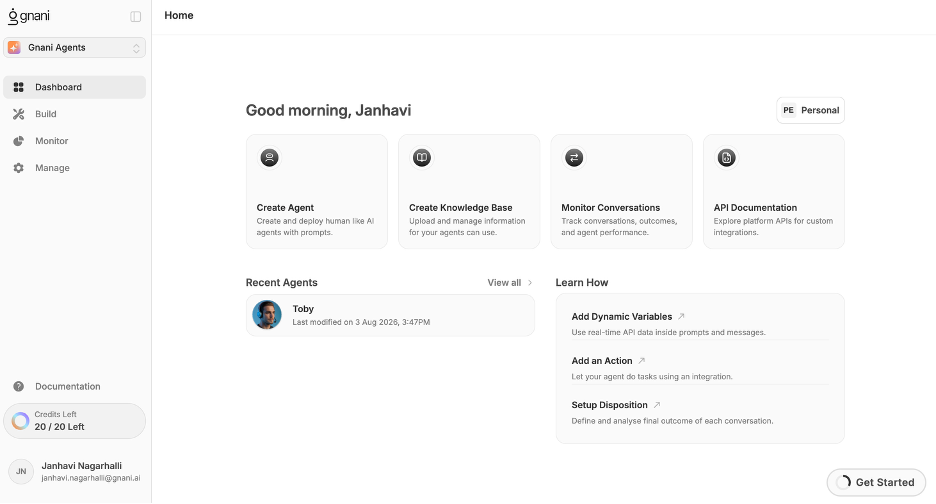
Gnani builds its voice platform around proprietary speech and language models. The stack includes speech-to-text, text-to-speech, speech-to-speech, language models, voice agents, analytics, agent assist, and voice biometrics. Gnani says its models are trained on 14M+ hours of real telephonic audio across 40+ languages and that its systems process 30M+ voice interactions daily across 200+ deployments. It supports cloud, private cloud, on-premise, and air-gapped deployment.
The important distinction is the training environment. Gnani says its speech models are trained on noisy telephonic audio and handle overlapping speech, code-switching, and regional accents. Its Prisma STT model ranks #1 in 8 of 9 Indian languages on the Kathbath Noisy 8kHz benchmark, according to Gnani.
Best suited to: Customer service, collections, KYC, outbound calling, and other high-volume voice workflows.
Watch for: Gnani is more voice-focused than broader omnichannel CX platforms, so teams looking for a single system spanning many digital channels may prefer a wider conversational platform.
2. Yellow.ai: Strong fit for omnichannel CX

Yellow.ai's VoiceX product handles real-time voice conversations with intent detection, sentiment detection, interruption handling, and AI-to-human transfers. Yellow.ai states that VoiceX supports 135+ languages, accents, and alphanumeric inputs.
Voice is part of a broader conversational platform, so the product makes sense when phone interactions need to connect with other customer-facing channels and workflows.
Best suited to: Customer support, sales, and customer journeys that span voice and digital channels.
Watch for: A narrowly defined phone automation project may not need the broader platform.
3. Uniphore: Strong fit for contact-center self-service
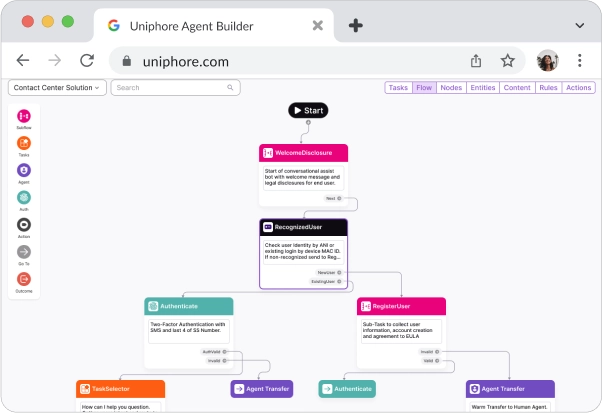
Uniphore's Self-Service Agent provides conversational automation across voice and digital channels. It uses enterprise knowledge, supports multi-step task automation, and includes real-time agent guidance and conversation analytics elsewhere in the customer service platform. Uniphore also supports multilingual interactions and describes a deployment using Arabic, English, and Hindi voice agents for a banking customer.
Its strongest fit is therefore the contact center itself, particularly where automated self-service needs to work alongside human-agent operations.
Best suited to: Customer service, call containment, self-service, agent assistance, and contact-center transformation.
Watch for: If you are deploying a focused voice-agent workflow rather than modernizing a contact center, you may not need the full breadth of the platform.
4. Haptik: Strong fit for conversational CX
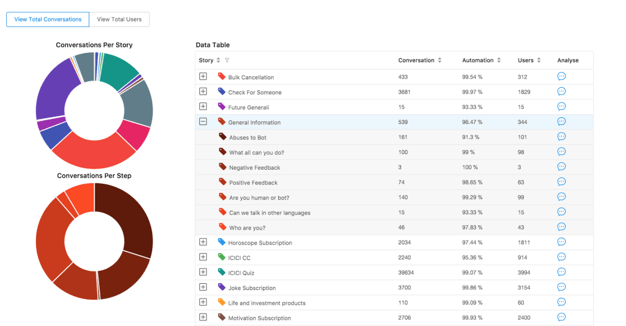
Haptik's voice agents handle inbound and outbound calls across customer support, lead qualification, product recommendations, bookings, and appointments. Its current voice offering supports 100+ languages and extends across telephony, web, WhatsApp, and other channels.
Its AI Agent Builder lets teams define workflows, use business-specific data, and connect agents to more than 100 integrations spanning CRMs, payment gateways, messaging channels, and ticketing systems.
Best suited to: Customer support, sales, lead qualification, bookings, and multilingual customer journeys.
Watch for: For a project centered entirely on high-volume phone automation, compare its voice performance against platforms built more specifically around telephony.
5. Bolna: Strong Fit for Flexible voice-agent development
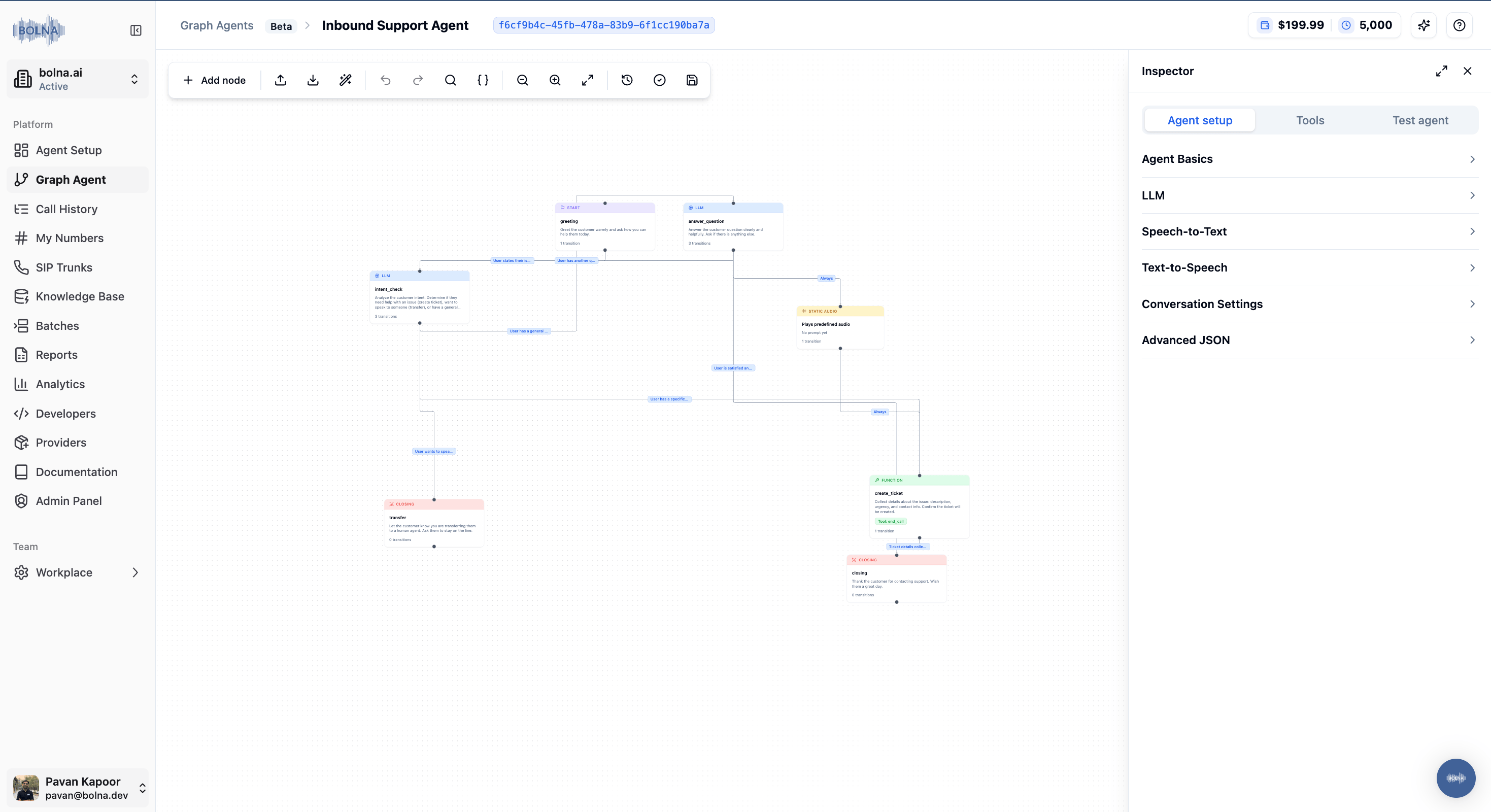
Bolna focuses on inbound and outbound voice agents and has a strong India focus. The company says 1,000+ companies use its voice AI stack across 10+ vernacular Indian languages, including Hinglish, Hindi, Tamil, and Telugu. Bolna also says its platform can handle thousands of inbound and outbound calls per minute.
The platform supports multiple ASR, LLM, and TTS providers and allows customers to bring their own API keys. Its pricing is token-based, with volume discounts and enterprise plans.
Best suited to: Outbound campaigns, support, collections, recruitment, and teams that want flexibility over the components behind the voice agent.
Watch for: More control over the underlying stack also means more responsibility for the team managing it.
6. Ringg: Strong Fit for High-volume calling

Ringg is built around phone-based voice agents for use cases including loan collections, lead qualification, customer onboarding, and inbound support. Its documentation states 10,000+ simultaneous calls across 20+ languages.
Its platform is organized around creating voice assistants, connecting phone numbers, and running inbound or outbound calling programs. That gives it a particularly direct fit for structured phone operations.
Best suited to: Collections, outbound sales, lead qualification, onboarding, and repetitive calling workflows.
Watch for: Buyers looking for broader conversational CX across multiple channels should compare Ringg with platforms such as Yellow.ai and Haptik.
7. Smallest AI: Strong Fit for Real-time voice applications
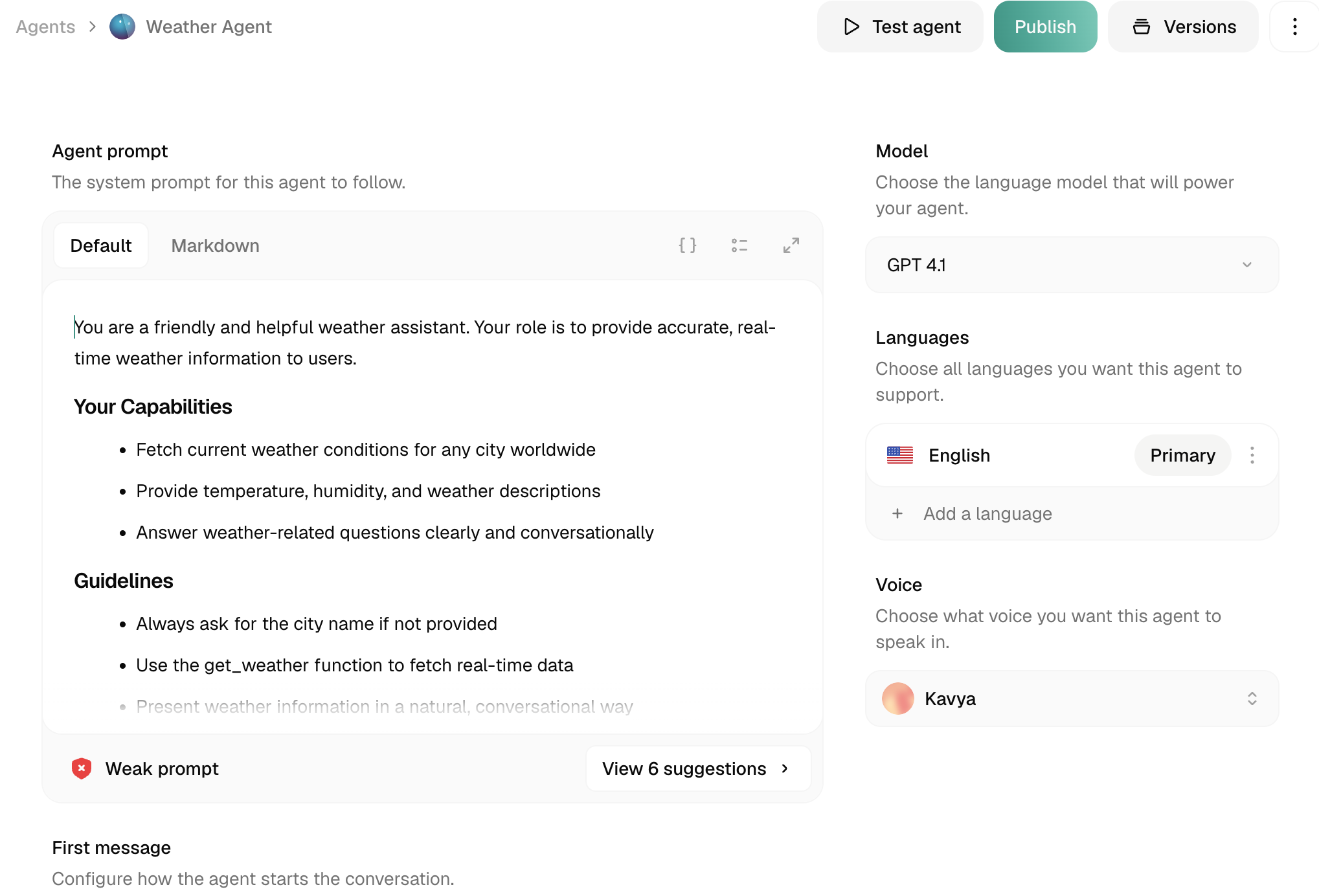
Smallest AI provides speech models alongside components for building voice agents. Its Pulse speech-to-text model currently documents 21 streaming language codes, plus regional aggregators. It supports real-time transcription, noise handling, and code-switching.
Its own documentation shows the components being combined into a working voice agent: Pulse for STT, Electron for LLM and tool calling, and Lightning for TTS.
Best suited to: Teams building real-time voice applications that want control over the underlying speech and agent architecture.
Watch for: This composable approach suits technical teams that want control over the stack. Buyers looking for a more managed CX platform should evaluate how much application logic they will need to own.
8. Nurix: Strong Fit for Voice agents connected to business workflows

Nurix's NuPlay platform combines voice-agent orchestration, integrations, observability, and security. Its current materials state 400+ system integrations, covering CRM, ERP, contact-center, and internal systems. The platform is designed to let agents retrieve information, update records, and trigger workflows during conversations.
Nurix also positions its voice agents around sales, support, lead qualification, scheduling, and other workflows where a conversation needs to result in an action inside an existing business system.
Best suited to: Sales, customer support, lead qualification, scheduling, and workflow-heavy voice interactions.
Watch for: If your main buying criterion is speech or telephony performance, evaluate those capabilities separately from integration breadth.
How to Evaluate Your Shortlist
Once you've narrowed the market to two or three platforms, run the same scenarios against each one. Use representative calls rather than polished demo scripts. Include background noise, code-switching, ambiguous requests, failed backend actions, and cases that should trigger a human handoff.
| Test | What to measure |
|---|---|
| Real call quality | Speech recognition across representative customer audio, accents, languages, and background noise |
| Conversation handling | Interruptions, context retention, turn-taking, recovery, and response timing |
| Task execution | Successful completion of the actual workflow the agent is expected to handle |
| Escalation | Human handoff and whether relevant conversation context is preserved |
| Performance | End-to-end latency, concurrency, and behavior at realistic call volume |
| Commercials | Total cost per completed interaction at expected usage, including relevant platform and telephony fees |
Choose the Right Conversational AI Platform Today
Gnani is the strongest fit for high-volume voice automation where telephony performance, multilingual interactions, and deployment flexibility are priorities.
Yellow.ai is a strong option when voice needs to sit within an omnichannel CX platform. Uniphore is particularly relevant to contact-center self-service. Haptik brings voice into broader conversational journeys. Bolna gives technical teams more control over the underlying voice stack, while Ringg focuses on high-volume calling. Smallest AI suits teams building real-time voice applications with more control over the speech layer. Nurix stands out when voice conversations need to trigger actions across business systems.
The final choice should come from a controlled proof of concept using your own calls, workflows, languages, and expected volume.
Frequently Asked Questions
Which conversational voice AI platform is best?
Gnani is the strongest overall fit for high-volume voice automation, particularly when multilingual telephony, production volume, and deployment flexibility are priorities. The other platforms fit more specific CX, contact-center, calling, or workflow requirements.
Which conversational voice AI platform is best for Indian languages?
Gnani, Haptik, and Bolna are strong platforms to evaluate for Indian-language voice use cases. Gnani states support for 40+ languages, Haptik for 100+, and Bolna for 10+ vernacular Indian languages. Language counts should be treated as a starting point because actual performance depends on accents, call quality, code-switching, and the workflow being automated.
Which platform is best for contact-center self-service?
Uniphore is the strongest fit when automated voice self-service is part of a broader contact-center strategy. Its Self-Service Agent works across voice and digital channels and supports enterprise knowledge and multi-step workflows.
Which platform is best for outbound calling?
Gnani, Bolna, and Ringg are relevant for outbound voice workflows. Ringg is particularly focused on high-volume calling, while Bolna offers flexibility over the models behind the agent. Gnani combines voice agents with a broader production voice platform.
What should you look for in a conversational voice AI platform?
Focus on real-call performance, conversation handling, workflow execution, language performance, integrations, deployment requirements, and behavior under realistic call volumes.
How should you evaluate vendors before choosing one?
Run the same proof of concept with each shortlisted vendor. Use representative calls and workflows, then compare task completion, escalation rate, latency, speech accuracy, and cost at realistic volume.
