

Retell AI vs Vapi (2026): Which Voice AI Wins?






TL;DR
Retell and Vapi solve different parts of the voice AI deployment problem.
Retell is the stronger fit for teams that want a faster path from idea to production, a visual agent builder, managed voice infrastructure, and native integrations with systems such as Salesforce and HubSpot.
Vapi is the stronger fit for engineering-led teams that want control over models, voices, transcription providers, telephony, and the agent runtime. Its current architecture centers on Assistants and Squads.
Neither is automatically the better enterprise platform. The decision changes when a deployment requires Indic-language telephony performance, private or air-gapped infrastructure, strict regional data controls, or a vertically integrated speech stack.
For a regulated, multilingual deployment where those requirements are hard gates, a full-stack platform such as Gnani becomes a materially different option rather than simply another orchestrator.
Research Methodology for Comparison
We scored Retell and Vapi on six criteria that matter when a voice agent moves beyond a demo and into production. The weighting favors real-time performance and deployment flexibility because those are difficult to fix after an architecture has been chosen.
The scores below are fit scores for a production voice deployment, not universal product-quality scores. A developer building a consumer voice application may reasonably weight provider flexibility more heavily. A RevOps team building a receptionist may give ease of deployment more weight.
About Retell AI
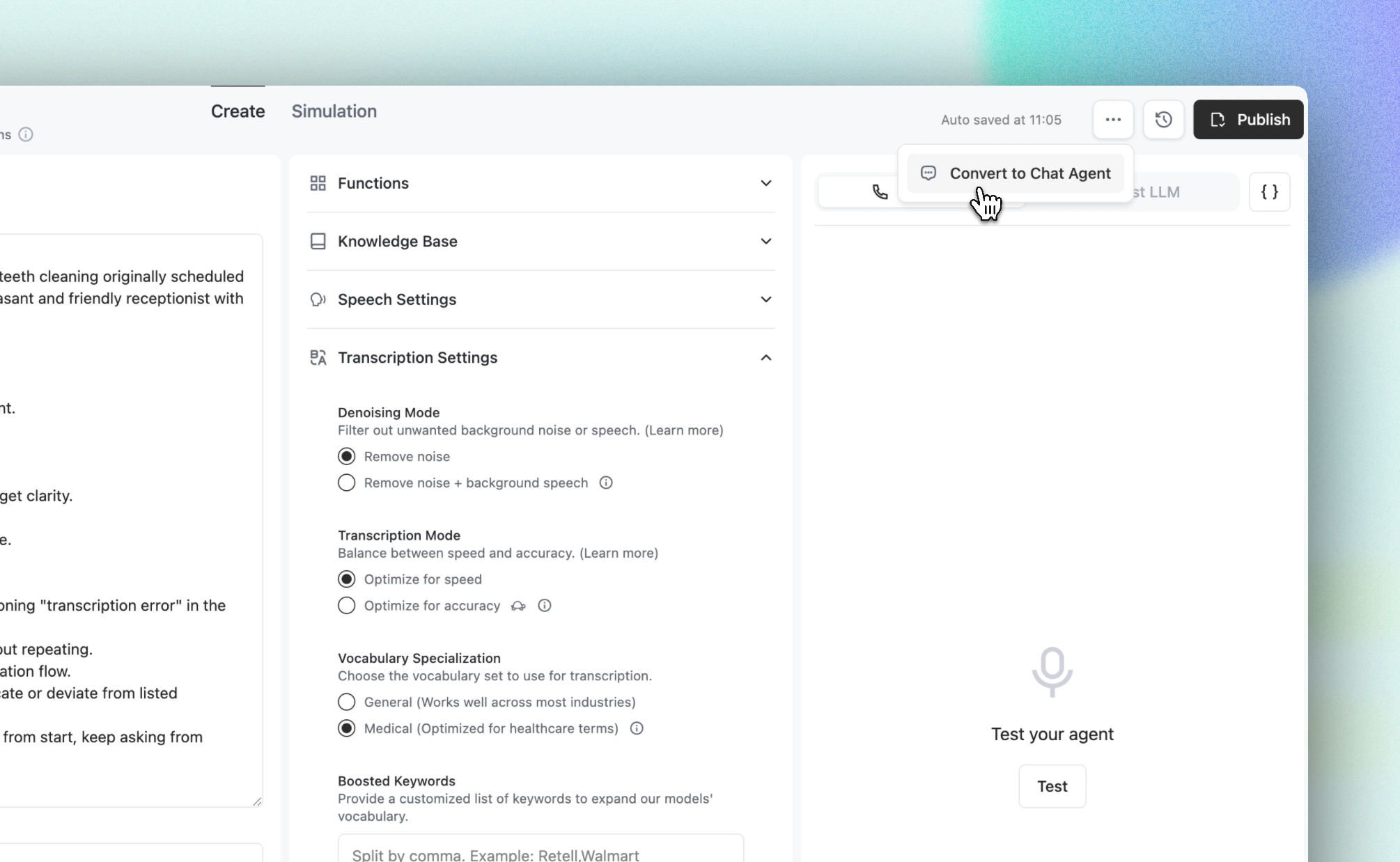
Retell is a managed voice AI platform built around a visual Conversation Flow builder and a voice infrastructure layer.
Its flow builder lets teams define conversation logic, tool calls, transfers, and branching behavior visually. Retell also handles telephony infrastructure, call analytics, webhooks, knowledge bases, and integrations with business systems.
The architecture is intentionally opinionated. You give Retell more responsibility for the voice-agent runtime, and in exchange your team has less infrastructure to assemble.
About Vapi
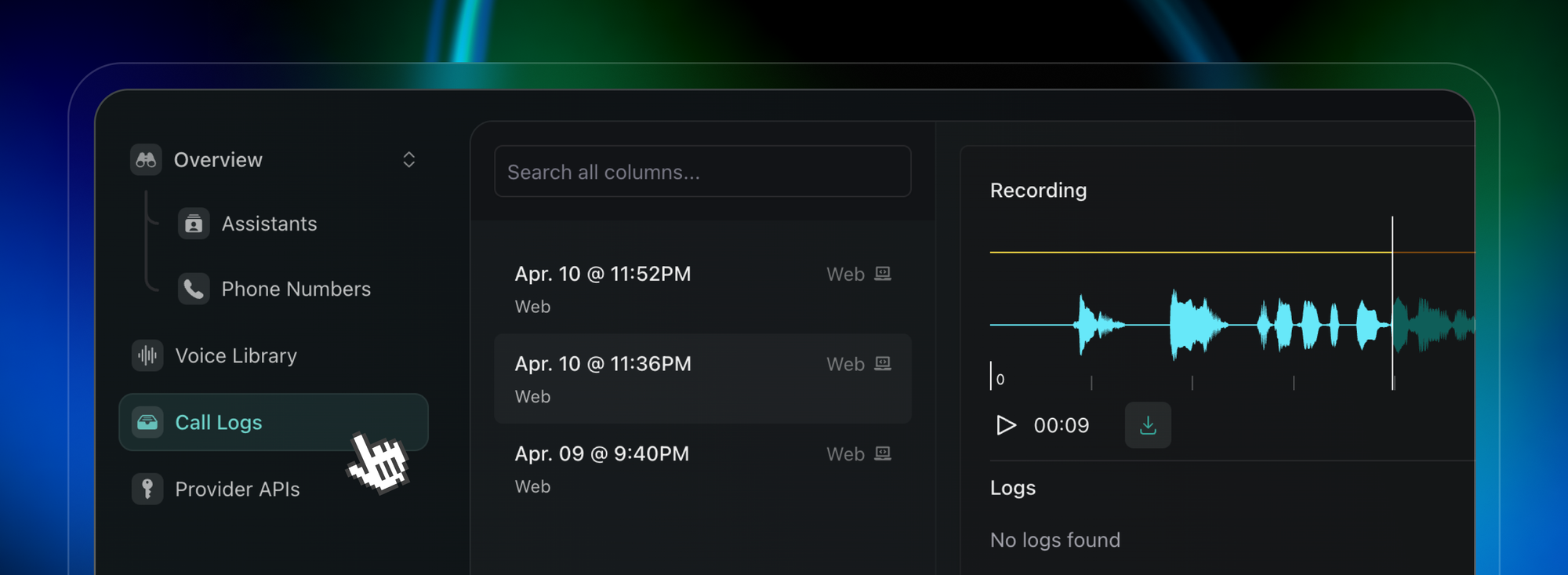
Vapi is a developer-first voice agent runtime. Its current architecture centers on Assistants for individual agents and Squads for multi-assistant workflows. Assistants can choose models, transcription providers, voices, tools, and other configuration independently. Squads let specialized assistants hand conversations to one another while retaining context.
Vapi also supports BYOK, custom LLMs, custom tools, API requests, TypeScript Code Tools, and integrations through its tool system.
The architecture is deliberately modular. You give your engineering team more responsibility for the stack, and in exchange you get more control over what sits underneath the agent.
At a Glance
Feature-by-Feature Comparison
Agent Development
The biggest difference here is how much of the build process each platform puts in front of the user. Retell gives teams a visual Conversation Flow builder where they can map out conversation logic, add tools, configure transitions, and change agent behavior without having to turn every iteration into a code change. That makes it particularly accessible when product or operations teams need to participate in agent development.
Vapi takes a more developer-oriented approach. Assistants are the core building block, while Squads let teams coordinate specialized assistants across a conversation. The platform also exposes its APIs and CLI for teams that want to manage agents programmatically rather than through a visual workflow.
Verdict: Retell is the better fit if you want to build and iterate visually. Vapi is better suited to teams that want to treat voice agents as software and manage them through code.
Multi-Agent Orchestration
Retell handles multi-agent conversations through agent transfers, allowing one agent to hand a call to another while carrying the conversation context with it. This works well when the architecture is relatively straightforward, such as routing a caller from a general-purpose agent to a specialist.
Vapi's Squads are designed around this concept more explicitly. Teams can define multiple specialized assistants and have them take over different parts of a conversation, which makes the architecture better suited to applications where different agents have distinct responsibilities.
Verdict: Vapi has the stronger architecture for teams deliberately building multi-agent systems, while Retell's approach is simpler for straightforward agent-to-agent handoffs.
Tools and Actions
Both platforms can move beyond conversation and actually do things on a user's behalf. Retell supports functions, APIs, webhooks, transfers, SMS, scheduling, and other actions that can be incorporated into an agent's flow.
Vapi exposes a broader developer-facing tool layer, including Custom Tools, Code Tools, API Requests, handoffs, DTMF, transfers, and knowledge-base queries, alongside integrations such as Google Calendar, Google Sheets, Slack, Make, and GoHighLevel. That gives engineering teams more ways to connect an agent to their own backend systems and logic.
The tradeoff is that more flexibility also means more of the implementation sits with the customer.
Verdict: Vapi has the edge when custom actions and backend extensibility are central to the product. Retell is the easier option when the agent mostly needs to work within standard workflows.
Provider Choice
This is where the platforms take their clearest architectural split.
Retell offers a curated selection of LLM, TTS, transcription, and telephony providers through its platform. That reduces the number of decisions the customer has to make, but it also means working within the providers Retell supports.
Vapi is designed to sit above those providers. Teams can configure their transcription, language model, and voice providers independently and bring their own provider credentials. That makes it possible to change the underlying speech or model stack without rebuilding the agent's core orchestration.
For an engineering team that expects to experiment with models or already has preferred provider relationships, that flexibility is significant. For a team that would rather have the platform make those infrastructure decisions, it can introduce unnecessary complexity.
Verdict: Vapi is the clear choice when control over the underlying voice stack matters. Retell is more attractive when teams would rather trade some provider flexibility for a more managed experience.
Telephony
Both platforms are built for phone-based voice agents and support the pieces needed to operate them in production, including SIP, transfers, DTMF, and integrations with telephony providers.
Retell takes a more managed approach, with documented integrations across providers such as Twilio, Telnyx, Vonage, Avaya, Genesys Cloud, Five9, and Amazon Connect. That gives teams a relatively broad set of options without requiring them to build the telephony layer themselves.
Vapi also supports phone numbers, SIP, transfers, DTMF, and multiple telephony providers, but its broader philosophy of exposing the underlying stack to developers carries through here as well. Teams have more control over how the telephony layer is assembled.
Verdict: Retell has the advantage for teams that want telephony handled as part of the platform. Vapi makes more sense when the engineering team wants to own and configure that layer itself.
Knowledge and Retrieval
Both platforms can ground voice agents in external knowledge rather than relying entirely on the model's built-in knowledge. Retell provides native knowledge capabilities and controls around how information is retrieved during a conversation.
Vapi approaches the same problem through its knowledge-base tools and broader tool architecture, allowing teams to plug retrieval into an assistant alongside their other custom tools and APIs.
For a standard FAQ or support agent, there is little reason to make this a deciding factor. The distinction becomes more relevant when retrieval is part of a larger custom architecture and the engineering team wants control over how that system works.
Verdict: Neither has a meaningful advantage for a straightforward knowledge-base deployment. Vapi has more room to customize the retrieval layer when teams want to build around their own architecture.
Testing and Evaluation
Both platforms have moved beyond simply letting teams make test calls and are adding more structured ways to evaluate agents before putting them into production.
Retell provides simulation testing alongside its call analytics, allowing teams to test how an agent behaves across defined scenarios. Vapi similarly provides simulation capabilities for Assistants and Squads, giving teams a way to run scenarios and inspect the resulting behavior.
The more important distinction is therefore not whether either platform supports testing, but how deeply those evaluation tools fit into the team's development workflow.
Verdict: This is effectively a tie. Both provide enough evaluation tooling for teams to test agents before production, with the better choice depending on which development workflow fits the team.
Latency and Real-Time Performance
Latency is one of the easiest categories to compare incorrectly. Retell publishes around 600ms latency for its voice agents. Vapi's documentation currently describes sub-600ms response times and emphasizes real-time turn-taking.
Neither number should be treated as a universal end-to-end benchmark.
The caller experiences more than model inference. The full path can include:
- Endpointing
- Speech recognition
- Model inference
- Tool execution
- Text-to-speech
- Network transport
- Telephony
A platform can therefore advertise a lower component latency while producing a slower caller experience. The correct test is the same call, on the same carrier, in the same region, using comparable models and voices.
Verdict: Neither gets a clean win from the published figures. Test end-to-end latency on your own telephony path.
Pricing and Unit Economics
Retell and Vapi take very different approaches to pricing.
Retell currently publishes $0.07-$0.31/minute for AI Voice Agents. Its detailed calculator breaks that into voice infrastructure, LLM, TTS, telephony, and add-ons. Its default calculator configuration currently comes to around $0.11/minute.
Vapi charges $0.05/minute for hosting on Build. Model-provider costs for STT, LLM, and TTS are separate and passed through at cost. Build includes 10 concurrent calls, with additional lines priced at $10 per month.
That means the headline prices are not directly comparable.
Verdict: Retell is easier to price because more of the production stack is represented in its rate card. Vapi has the lower platform fee, but that number is deliberately not an all-in voice cost. For a real comparison, both need to be modeled using the same LLM, STT, TTS, telephony provider, call duration, and monthly volume.
Integrations
Retell has the stronger out-of-the-box business application story.
Its native integrations include Salesforce and HubSpot on the CRM side, plus a range of telephony providers and scheduling systems.
Vapi's approach is more developer-centric. Rather than trying to provide a native connector for every enterprise system, it provides APIs, Custom Tools, API Requests, Code Tools, webhooks, and integrations such as Make and GoHighLevel.
That difference matters. A RevOps team that wants to connect an agent to Salesforce quickly will generally prefer Retell. A platform team that wants to build its own reusable integration layer may prefer Vapi.
Verdict: Retell wins for native business integrations. Vapi wins for extensibility.
Security and Compliance
Both platforms have enterprise security offerings, but the packaging differs. Retell's Enterprise plan includes custom MSA/DPA terms, RBAC, custom SSO, dedicated stable infrastructure, high concurrency, and dedicated support.
Vapi's Scale plan adds enterprise security controls including SOC 2, SSO, RBAC, data residency, support SLAs, and enterprise uptime. Build does not include those controls. HIPAA and Zero Data Retention are separately priced add-ons.
The key procurement question is not simply whether a vendor has SOC 2 or HIPAA.
It is: What data passes through which providers, where is it stored, and which controls apply to the exact configuration you are buying?
Vapi's BYOK architecture makes that question particularly important because the underlying provider can be customer-selected. Vapi also allows customers to store recordings in their own AWS S3, GCP, or Cloudflare R2 bucket.
Verdict: Retell has the simpler managed compliance story. Vapi gives engineering teams more control but requires more architectural diligence.
What Real Users Say
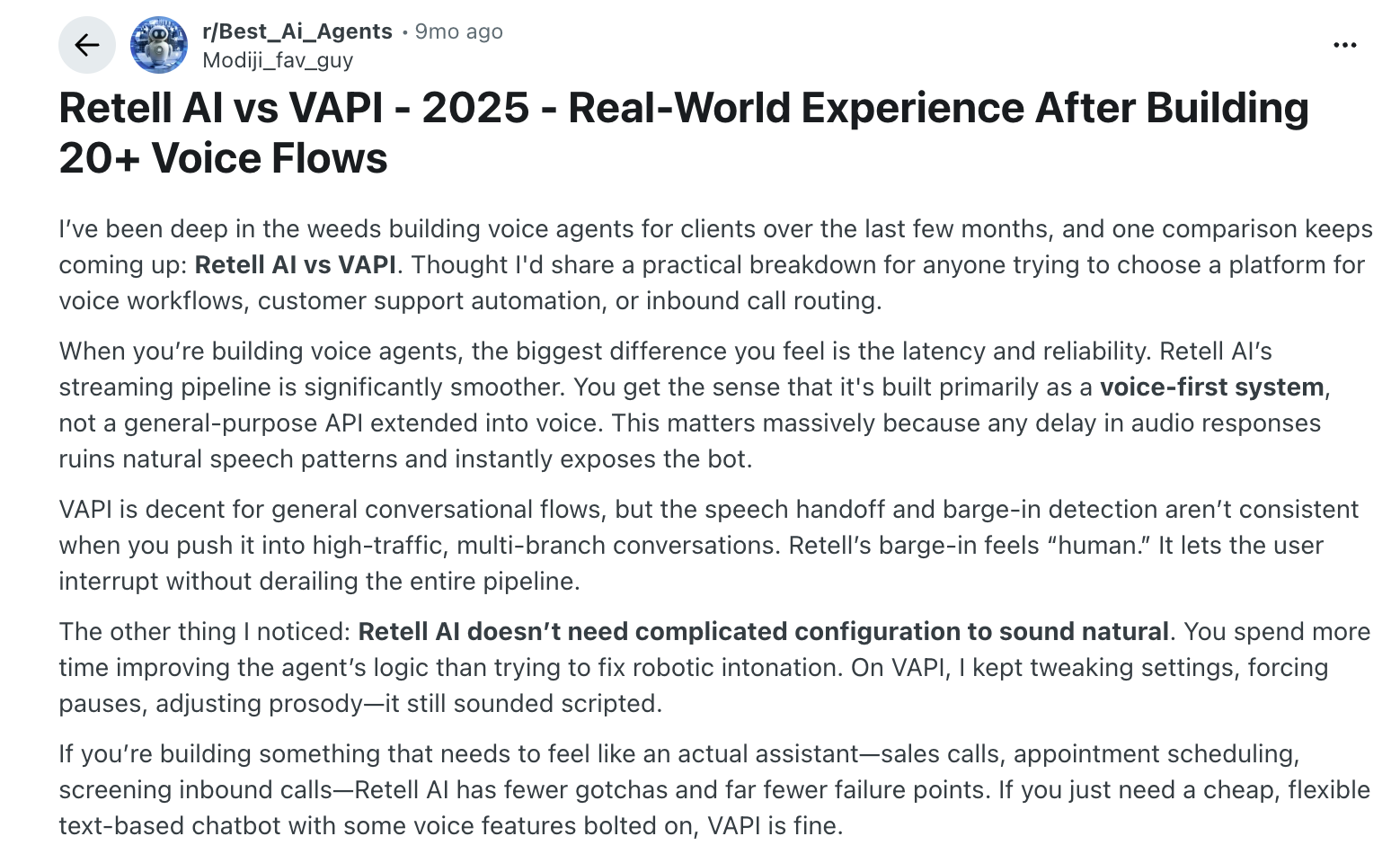
Community discussions are useful for finding failure modes, but they are not reliability statistics. Retell discussions on Reddit include reports around telephony configuration, transfers, voice quality, scheduling, and number provisioning. On the other hand, Vapi discussions include reports involving provider behavior, webhooks, SIP, concurrency, and knowledge-base configuration.
Overall Score Breakdown
Retell scores higher because the weighting favors managed deployment, native integrations, and pricing simplicity. Vapi would close the gap or overtake Retell if provider flexibility, custom infrastructure, and developer control carried more weight.
Where Both Fall Short
Retell and Vapi are strong when the problem is primarily building an AI voice agent. Both give enterprises the pieces needed to create conversations, connect tools, route calls, and put agents into production without building a voice runtime from scratch.
The requirements change when voice becomes infrastructure for a large, regulated contact center.
At that point, the platform is no longer being judged only on whether an agent can complete a workflow. The underlying speech models, telephony performance, deployment architecture, language coverage, data path, analytics, and operational tooling all start affecting the outcome.
That is where the differences between an orchestrator and a vertically integrated voice stack become more important.
Indian telephony is a different test from language support
Both Retell and Vapi can access speech providers that support Indian languages. That is useful, but a language appearing in a provider list does not tell you how the system will perform on an actual Indian contact-center call.
Production audio can contain 8kHz telephony compression, regional accents, background noise, interruptions, code-switching, names, addresses, account numbers, and domain-specific terminology. A system that performs well on clean speech can behave very differently once those conditions are introduced.
Gnani's research makes this distinction using Gramvaani, a rural Hindi telephony dataset. In its published comparison, ElevenLabs Scribe, for example, records 7.67% WER on Kathbath Clean but 37.46% on Gramvaani. The point is not that one provider is universally better. It is that clean benchmark performance is a poor proxy for production telephony performance.
That is the test Retell and Vapi buyers should run as well: take representative call recordings, use the exact telephony path intended for production, and measure the languages and conditions that actually matter.
Provider flexibility can also become another layer to manage
Vapi's provider-agnostic architecture is one of its biggest strengths. Teams can bring their own provider keys and choose the models and speech services underneath the agent.
It also means that the customer owns more of the architecture.
The team needs to understand which provider handles transcription, which one handles synthesis, where those services operate, how data moves between them, what happens when one fails, and which contractual and security obligations apply to each component.
Retell abstracts more of that complexity away. That makes it easier to operate, but also gives the customer less control over the underlying stack.
Neither approach is inherently wrong. The tradeoff becomes more consequential when the organization has strict requirements around data sovereignty, model provenance, language performance, or failure handling.
Deployment requirements can extend beyond SaaS configuration
Enterprise buyers also need to distinguish between enterprise security controls and deployment sovereignty.
SSO, RBAC, audit logs, encryption, SOC 2, and a DPA are important. They do not answer whether a workload can run inside a customer's own infrastructure or whether audio and transcripts can remain within a specific geographic or network boundary.
Retell publishes enterprise deployment options including VPC and on-premise configurations. Vapi's enterprise offering includes controls such as data residency, but its public architecture remains primarily SaaS-oriented.
For organizations that need private cloud, on-premise, or air-gapped operation as a hard requirement, that distinction should be established during architecture review rather than inferred from an enterprise security page.
Voice becomes more than an agent
There is another limitation that becomes visible at scale: the voice agent is rarely the only AI workload in a contact center. A mature deployment may also need conversation analytics, agent assist, quality monitoring, caller authentication, speech analytics, and other systems operating on the same interaction data.
Retell and Vapi can connect to external systems to build this architecture. The advantage is flexibility. The cost is that the enterprise has to integrate and operate those components. A vertically integrated platform takes the opposite approach.
Instead of treating the voice agent as the top layer of a collection of external services, it can own more of the speech and AI pipeline underneath it.
That brings us to where Gnani is materially different from both.
Where Gnani Wins Over Both
Retell and Vapi are primarily solving the orchestration problem: how do you build, configure, connect, and operate an AI voice agent?
Gnani approaches the problem further down the stack.
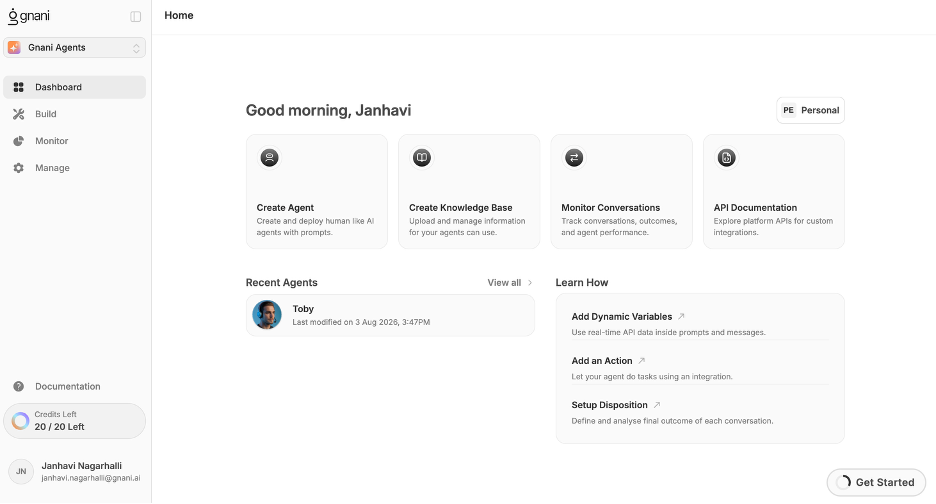
Its platform combines proprietary speech recognition, text-to-speech, speech-to-speech, language models, voice agents, speech analytics, agent assist, and voice biometrics. That means the enterprise can evaluate the speech stack and the agent layer as one system rather than assembling every component independently.
The distinction matters most in environments where the underlying speech system is part of the business problem.
Built around telephonic speech
Gnani says its speech models have been trained on more than 14 million hours of real telephonic audio across 40+ languages. Prisma v2.5 is positioned specifically around noisy 8kHz speech, code-switching, overlapping speakers, and regional accents. Gnani also reports #1 results across 8 of 9 Indian languages on the Kathbath Noisy 8kHz benchmark.
That does not make the benchmark a substitute for a customer evaluation. It does make the training approach relevant to buyers whose production environment looks like the data the model was trained on. For an Indian contact center, that distinction can matter more than whether a platform has another ten integrations.
The speech stack is part of the platform
Gnani's proprietary stack currently includes Prisma v2.5 for speech-to-text, Timbre v2.5 for text-to-speech, Warp v2.0 for speech-to-speech, and Aion v3.2 for agentic reasoning. Timbre v2.5 supports 40+ voices across 10 Indian languages, while Warp is designed as a native speech-to-speech model rather than a conventional STT-to-LLM-to-TTS cascade.
That vertical integration changes the optimization problem. With a modular orchestrator, the customer can swap components. With an integrated stack, the vendor can optimize the components together.
For teams that want maximum provider choice, the former is more attractive. For teams that care more about consistent latency, language performance, and control over the complete voice pipeline, the latter can be a better fit.
Deployment is part of the product
Gnani positions its models for cloud, private, on-premise, and edge deployment, including workloads where the organization needs greater control over where processing takes place. Aion is also positioned as on-premise and edge-ready.
That matters for organizations where deployment architecture is determined by security or regulatory requirements before the product team gets to choose an agent framework.
The question becomes less about whether the agent can call an API and more about where the speech is processed, where the resulting data goes, and how much of that pipeline the enterprise can control.
The platform extends beyond the call itself
Gnani also brings speech analytics, agent assist, and voice biometrics into the same broader platform.
That does not mean every enterprise should consolidate these functions. Best-of-breed architectures can be preferable when a company already has strong systems in place. But for a contact center starting from scratch, having the agent, speech models, analytics, and supporting AI capabilities under one platform can remove a meaningful amount of integration work.
Retell vs. Vapi vs. Gnani
The comparison is therefore less about declaring one universal winner and more about where each architecture fits.
The distinction is simple. Retell is the better fit when the goal is to get a capable voice agent into production without owning too much infrastructure. Vapi is the better fit when the engineering team wants to control the components underneath that agent.
Gnani becomes more compelling when the speech stack, deployment environment, and broader contact-center AI requirements are themselves part of the problem.
Final Verdict
For a simple English-language voice application, either Retell or Vapi can be a strong choice. The calculation changes when the deployment involves Indian telephony, multiple local languages, strict infrastructure requirements, or a contact center that needs speech analytics, agent assist, and voice biometrics alongside the agent itself.
That is where Gnani's vertically integrated architecture becomes relevant.
The best way to make the decision is still to test the platforms against the calls that matter. Use the same carrier, the same recordings, the same workflows, and the same production constraints. Measure not just whether the agent completes the happy path, but how it performs when the audio is noisy, the customer switches languages, the API fails, the call needs a human, and the system has to operate at scale.
Frequently Asked Questions
Is Retell AI better than Vapi AI?
Retell AI is better for teams that want a managed voice AI platform with visual agent building and native business integrations. Vapi AI is better for engineering teams that want greater control over models, voices, providers, and the agent runtime.
What is the difference between Retell AI and Vapi AI?
Retell AI uses a visual, low-code Conversation Flow builder, while Vapi AI takes a developer-first approach built around Assistants, Squads, APIs, and configurable providers.
Which is cheaper, Retell AI or Vapi AI?
Vapi AI has a lower published platform fee at $0.05 per minute, while Retell AI publishes $0.07–$0.31 per minute depending on configuration. However, Vapi charges STT, LLM, and TTS costs separately, so the prices are not directly comparable.
Which is better for Indian languages, Retell AI or Vapi AI?
Neither should be chosen for Indian-language deployments based solely on listed language support. Production performance depends on factors such as 8kHz telephony audio, regional accents, background noise, code-switching, and domain-specific terminology. Both should be tested using representative Indian call data.
What is the best alternative to Retell AI and Vapi AI?
For deployments requiring multilingual telephony, vertically integrated speech models, private or on-premise infrastructure, speech analytics, agent assist, or voice biometrics, Gnani is an alternative with a broader voice AI stack.
